Safety Risks Homeowners Ignore
A garage door is a heavy moving system, not just a convenience feature. A lot of the safety risk comes from problems homeowners keep using for too long because the door still sort of works. That is usually when the risk climbs: weak springs, off-track movement, sensor problems, or a door that is clearly fighting its own weight.
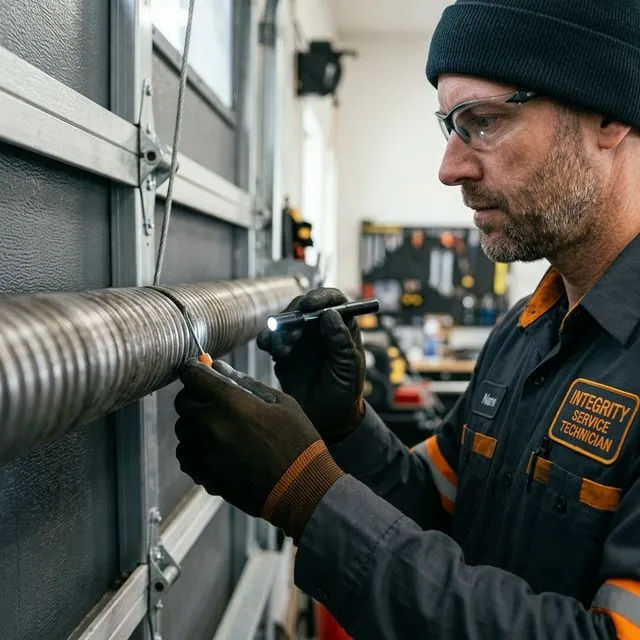
The most ignored risks are the ones that still let the door move a little. A heavy door, a broken spring, an off-track path, or bad reversal behavior can all turn from inconvenience into real risk if the system keeps being forced.
The dangerous problems often start as “minor” ones.
The danger usually rises when extra load shifts through the system.
The useful goal is to find the risk before it escalates.
The dangerous problems often start as “minor” ones.
A weak or broken spring, a door that starts leaning, cables losing tension, or sensors that are not reacting correctly all count as real safety issues even before the door becomes unusable.
The mistake is assuming that partial movement means the system is still safe enough to keep using.
The danger usually rises when extra load shifts through the system.
A spring problem pushes weight into the opener and hardware. An off-track issue can damage panels and tracks if the door is forced. A reversal problem matters because the system is supposed to stop or change direction when something is wrong.
These are not abstract concerns. They are the reasons a “small” problem often becomes a much bigger repair.
Heavy doors strain the opener and lift hardware.
Off-track movement can bend, jam, or crack parts fast.
Bad reversal behavior means the safety system is not doing its job.
The useful goal is to find the risk before it escalates.
A proper visit should check the spring and balance system, track path, cable condition, rollers, hinges, and the opener safety devices together.
That gives the homeowner a real answer about what is unsafe now and what needs to be corrected before the door goes back into regular use.
The practical follow-up questions.
If the door still moves, is it safe enough to keep using?
Not necessarily. Some of the riskiest failures are the ones that still allow partial operation while shifting extra load through the system.
Do sensor issues really matter if I mostly watch the door?
Yes. The safety system is supposed to react even when attention slips. If the reversal behavior is wrong, the system needs to be checked.
What safety problem should make me stop using the door right away?
A sudden weight change, a broken spring, an off-track door, or clearly incorrect reversal behavior are all strong reasons to stop forcing the system and get it checked.
Move from the guide to the right page.
If this article matches what you are seeing, the next step is usually one of two things: go to the service page that fits the failure, or go to the city page that confirms local coverage and the most relevant repair paths.
City Repair Page
Rhome, TX
Garage door repair, broken spring replacement, opener diagnostics, and off-track door help for homeowners in Rhome.
View local page →City Repair Page
Fort Worth, TX
Garage door repair, spring replacement, opener service, and off-track door help across Fort Worth neighborhoods.
View local page →City Repair Page
Dallas, TX
Garage door repair and opener diagnostics for Dallas homeowners who need a clear answer and a repair-first recommendation.
View local page →City Repair Page
Keller, TX
Broken spring repair, opener troubleshooting, and stuck-door service for Keller homeowners who need the door working again.
View local page →More diagnostic guides for DFW homeowners

6 MIN READ
Repair or Replace a Garage Door? A DFW Homeowner Guide
Most garage door failures still point to repair first. This guide shows when repair usually makes sense, when replacement becomes real, and what an honest diagnosis should check.
5 MIN READ
Signs Your Garage Door Spring Is Failing
A spring usually gives warning signs before it snaps. Here is what homeowners often notice first, what those signs usually mean, and when to stop using the door.